

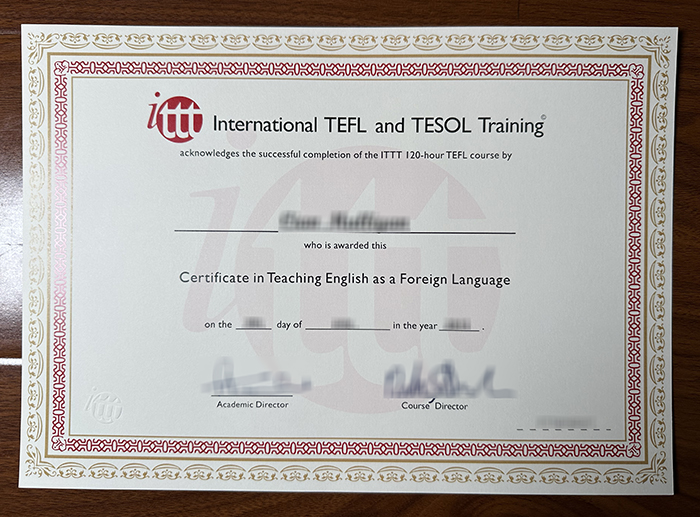
In today’s increasingly globalized world, the status of English as an international lingua franca has become increasingly solidified, giving rise to a vast global English teaching market. For young people who aspire to “work while traveling the world” or for educators who wish to enhance their competitiveness within the country, TEFL and TESOL are two core concepts that cannot be bypassed. They are not only the symbols of industry standards but also the starting points of countless English teachers’ careers. Unexpected method to obtain a TEFL and TESOL Certificate online.
I. Concept Explanation: The Same Goal Through Different Paths
Although often compared, TEFL and TESOL have subtle differences in their academic definitions.
TEFL stands for “Teaching English as a Foreign Language.” As the name suggests, it mainly targets countries where English is not the native language. If you plan to go to countries like China, Japan, Brazil, or Saudi Arabia to teach local students to learn English as a second language, then TEFL is your professional field. Its teaching focus typically lies in grammar, vocabulary construction, and the basic application of language.
TESOL stands for “Teaching English to Speakers of Other Languages.” This concept has a broader scope, encompassing both the content of TEFL and the teaching of English to immigrants or international students in English-speaking countries (such as the United States, the United Kingdom, and Australia). In English-speaking countries, this is often referred to as ESL teaching. The teaching method of TESOL is more focused on the practical application of language in academic settings or social life, such as how to understand university lectures or how to integrate into the local community.
Although the definitions differ, in the global recruitment market, the vast majority of language schools and institutions regard both as equally effective entry-level requirements.
II. Certificate Value: The “Hard Currency” for Professional Admission
The TEFL/TESOL Certificate is a professional qualification certificate that proves your ability to teach English as a second language. For many non-education professionals with fluent English skills, this certificate is the “key” to entering the international education industry.
A global recognized employment passport
An internationally recognized TEFL or TESOL certificate (usually requiring at least 120 hours of study), is the minimum standard for applying for the vast majority of English teaching positions worldwide. Whether in private language schools in Europe or international schools in Asia, employers require job seekers to hold this certificate to prove that they have mastered the basic classroom management and teaching methods.
Practical training of professional skills
Many people mistakenly believe that “being able to speak English” means “being able to teach English.” The core value of TEFL/TESOL courses lies in breaking this misconception. The courses cover lesson planning, grammar breakdown, error correction techniques, and teaching strategies for different age groups. They teach you how to design a lively lesson from scratch, rather than just reading from a script.
A booster for career development
For teachers who aspire to advance in domestic English training institutions or private bilingual schools, holding a TESOL certificate often means higher hourly rates and more promotion opportunities. It represents that the teacher has an internationalized teaching perspective and standardized teaching ability. Is it possible to get a TEFL and TESOL Certificate for a better job?
III. Career Path: The Advancement Road from Novice to Expert
After obtaining a TEFL/TESOL certificate, the career development path is clear and broad. It usually consists of the following stages:
1. Entry Stage: Overseas Travel and Experience Accumulation
Most holders of the certificate start their journey by working as language school teachers or foreign teachers in public schools in non-English-speaking countries. The core goal of this stage is to accumulate practical classroom experience, adapt to cross-cultural teaching environments, and enjoy the lifestyle of a “digital nomad.”
2. Advancement Stage: Professional Deepening and Specialization
After having 2-3 years of experience, teachers can choose to specialize in a specific field to earn higher salaries. For instance, they can switch to teaching business English, serving multinational enterprise clients; or focus on tutoring for exams like IELTS or TOEFL, becoming a score-boosting expert; or enter international schools as subject English teachers, enjoying a more stable salary and welfare system.
3. Advanced stage: Academic management and teacher training
Senior teachers can be promoted to teaching directors or academic principals, responsible for curriculum development, quality control of teaching, and management of the teacher team. Additionally, transitioning into TEFL/TESOL trainers is also a golden path, responsible for training a new generation of English teachers, shifting from “teaching” to “teaching others to teach”.
4. Transformation stage: Education publishing and online entrepreneurship
Some educators will use their accumulated resources to transition behind the scenes, engaging in textbook writing, educational product planning, or developing online courses to establish their own educational brands, achieving diversified career development.