

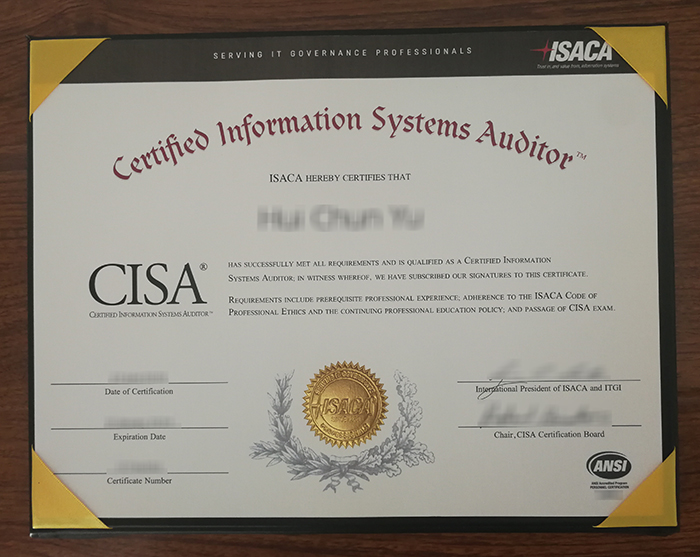
In the wave of digital transformation, the data assets and information system security of enterprises have become the core lifeline that determines their survival. Against this backdrop, CISA, as the authoritative certification in the field of information system auditing worldwide, is hailed as the “golden passport” of the IT auditing industry. For professionals dedicated to delving deeply into the areas of information security, risk control, and IT governance, obtaining CISA certification not only means mastering the international auditing language but also serves as a “royal certification” to access the core management level of multinational enterprises. The reasons to obtain a CISA certificate online.
I. CISA Institution Background: Global Recognition of Authority
CISA stands for Certified Information Systems Auditor, which was introduced by the International Information Systems Audit and Control Association (ISACA) in 1978. It is currently the only widely recognized professional qualification certification in the field of information system auditing globally.
ISACA, as a leading institution in the field of IT governance worldwide, its standards and frameworks are widely adopted by governments and multinational enterprises. The CISA certification aims to enhance the professional level in the fields of information system auditing, control, and security, ensuring that the certified individuals possess the ability to assess an enterprise’s IT architecture, identify risks, and ensure business continuity. CISA-certified professionals are the “gatekeepers” for safeguarding the security of digital assets in sectors such as finance, internet, high-end manufacturing, and government regulatory agencies.
II. CISA Certificate System: Comprehensive Coverage of Five Domains
The CISA certification system is not a single technical assessment but a rigorous knowledge framework covering from the auditing process to asset protection. Its examination content is based on five core knowledge domains, aiming to comprehensively assess the candidate’s comprehensive practical abilities.
1. Knowledge System Architecture
Information System Auditing Process: Examines auditing standards, practical operations, and report writing capabilities to ensure the compliance and effectiveness of the auditing work.
IT Governance and Management: Focuses on evaluating whether the IT strategy of the enterprise is consistent with business goals and the rationality of the organizational structure and resource allocation.
Acquisition, Development, and Implementation of Information Systems: Focuses on project management and the software development life cycle to ensure risk control before the new system goes live.
Operations and Business Resilience of Information Systems: Covers daily operations, disaster recovery, and business continuity plans to ensure high availability of the system.
Information Asset Protection: This is the core focus of CISA, involving cybersecurity, access control, and data privacy protection to prevent information leakage and hacker attacks.
2. Certification Path: A Combination of Examination and Experience
The CISA certification implements a strict “examination + experience” dual review system. Candidates must pass a computer-based examination of 150 multiple-choice questions (full score 800, passing score 450) and provide at least 5 years of work experience in information system auditing, control, or security-related fields within 5 years after passing the examination. A bachelor’s degree or above can offset 2-3 years of work experience. This mechanism ensures that the certified individuals not only understand the theory but also possess practical problem-solving capabilities. The surprising method to get a CISA certificate safely and quickly.
III. The Value of CISA Certificates: Accelerator for Career Advancement
Obtaining CISA certification and using the title after one’s name means that the holder has reached the internationally recognized peak of professional status. Its value is reflected in multiple dimensions:
1. Industry Recognition and High Salary Entrance Ticket
In recruitment at accounting firms, banks, and large internet companies, CISA is often a priority for positions such as IT audit managers and information security officers. Data shows that CISA-certified individuals generally have higher average salaries than their non-certified counterparts, making it a truly “high-salary pass”.
2. Core Competitiveness in Career Development
For IT professionals who aspire to move from technical positions to management roles, CISA offers valuable governance perspectives. It demonstrates that certified individuals have the ability to convert technical risks into business language and can assist management in making scientific decisions, which is a key factor in advancing to the positions of Chief Information Officer or Chief Risk Officer.
3. Continuous Education and Global Network
Becoming a CISA certified individual means joining a global professional network. ISACA requires certified individuals to accumulate sufficient continuing education credits every three years and pay maintenance fees, which prompts professionals to constantly update their knowledge base and keep up with the latest threats and defense technologies in cybersecurity.